
A philosophical piece about a lost package, a hotel front desk, and a film about dolls. The welcome is the first thing we cut and the last thing we can replace.
Somewhere between a delivery van and a pick-up point in a corner shop, my package stopped existing.
The tracking page said it had been delivered. The shop said it had never arrived. The carrier’s website offered me a FAQ that answered every question except mine. Below the FAQ sat a ticket form. I filled it in with the tracking number and the whole small history of my missing box. An automated reply arrived within seconds, warm in the way a laminated menu is warm. It thanked me for reaching out. It said my request was important.
Then the ping-pong started. The carrier’s system said the pick-up point was responsible. The pick-up point said the carrier was. There was a portal, a form, a case number. The pick-up point had a person who could not help me. Beep. “Your package is unknown to us”. The carrier had no person at all, save for an unhelpful ‘AI’ assistant. Thanks, clanker! For a full week I was a ticket travelling inside a system that worked exactly as designed.
Strange enough, I wasn’t primarily angry about the package. What wore me down was something quieter. At no point in that fateful week did anyone receive me. Ain’t nobody home, like the B.B. King song.
The desk with a tablet on it
This week I read that Dutch hotels are removing the person from the front desk. Self check-in is rising fast, driven by labour shortages and cost. A boutique hotel manager in Amsterdam put it honestly: without the digital systems, the room prices would become unaffordable. Fewer hands available, wages rising, so a tablet takes the desk.
And let me say this in a clear way, because this is not an anti-technology piece. The tablet is often better. It lets you in at three in the morning without shame. It doesn’t sigh when your flight was late. It never loses your reservation and never makes you queue behind a man disputing his minibar bill. The automation of the procedural is a gift, and I accept it gladly. The same is true in my own work. AI now writes the summary I never wanted to write, tracks the metrics I never wanted to chase. Good. Take it all.
But notice what the hotel manager is actually saying. Human attention has become the expensive part. It doesn’t scale, it can’t be copied, every minute of it spent on one guest is a minute gone forever. So the market does what markets do with expensive things. It removes them.
Which would be fine, if human attention were just another cost. But what if it is vital to the product?
Why the welcome weighs something
Think about why being received by a person feels like anything at all.
When a receptionist looks up, reads your face in half a second (tired, relieved, slightly lost), and adjusts their greeting to what they see, they are spending something on you. Minutes of their one finite life, attention they cannot get back, given to your arrival specifically. You feel that expenditure, even if you never name it. That is what a welcome is. Something was spent, so something was meant.
The ticket system that thanked me for reaching out spent nothing. Each reply cost a fraction of a cent and could be sent to a million people at once. And that is exactly why it weighed nothing. The words were warm; the warmth was free; free warmth doesn’t register.
So here is the paradox of this decade, playing out at Dutch hotel front desks right now. Attention is becoming the only thing that still distinguishes one stay, one service, one meeting from another. And because it is scarce and expensive, it is the first thing we automate away. We are pricing out the differentiator to protect the margin. It is a reasonable decision, made by reasonable people, and it quietly removes the one thing nobody can copy.
Ain’t nobody home
I recently rewatched Mamoru Oshii’s Ghost in the Shell animated films. Out of nostalgia, but also out of curiosity about how well the themes had aged into the age of automation. They have not aged a day.
In Innocence (Mamoru Oshii, 2004), companion robots called gynoids begin killing their owners. The investigation leads to their maker, and to the secret of why these particular machines felt so unsettlingly alive. The company had been copying the ghosts (the film’s word for the soul) of kidnapped children into the dolls. Every copy made the doll a little warmer and the child a little emptier.
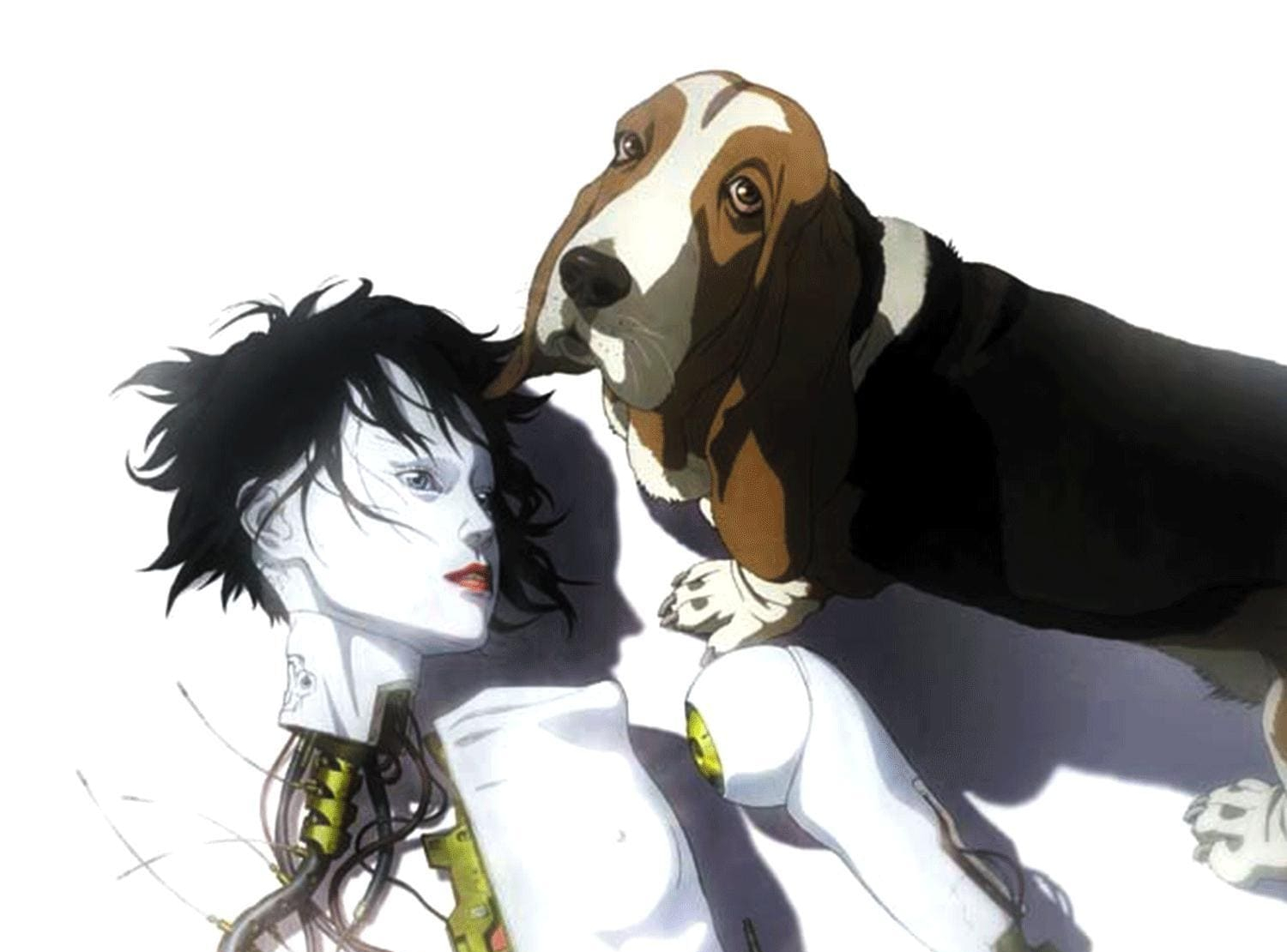
Innocence is full of dolls, and full of the question of why humans keep building things in our own image. The answer is uncomfortable. The doll disturbs us because it is a perfect likeness with nobody home. It has the form of a person and none of the cost of being one. Nothing was ever spent inside it.
I think about the gynoids every time an automated message thanks me for my patience. Our systems, too, have been dubbed with human warmth. Every friendly line a model produces is an echo of millions of humans who once wrote something like it and meant it. The likeness is excellent and getting better. But a likeness of a welcome is still a doll. The form of reception, with nobody spending anything, for anyone, ever.
The first Ghost in the Shell asked what remains of a person when the body and even the memories can be manufactured. Innocence asks the harder question for our decade. When the imitation becomes this good, what did the original have that the copy doesn’t? The film’s answer, and mine, is the same. A ghost. Someone actually home, actually paying attention.
The room that remains
Cut to a retrospective on a Tuesday afternoon. There is this tool I have been trying out that automates large parts of the retrospective.
The AI has done its work before anyone sits down. Action items prepared, metrics tracked, blockers flagged. The procedural layer of this meeting has been handled better than any human ever handled it. What’s left in the room is only the part that can’t be dubbed. Someone has gone quiet in the last three sessions and today is the day it matters. Someone is about to say the true thing they have been not saying for six weeks, but only if the room holds. Someone needs to be received before they can contribute.
The Agile Manifesto named this in 2001, before there was any automation worth the name. Individuals and interactions over processes and tools. For twenty-five years that line was read as a mild preference. It turns out it was a prediction. The processes and tools are being handled. Individuals and interactions are what remains, and they remain expensive, unscalable, and unautomated, for exactly the reason the receptionist’s glance means something. They cost a person something to give.
The industry is currently making the hotel manager’s choice, everywhere, at once. It automates the procedural and quietly assumes the human layer will take care of itself. It won’t. It never did. Reading a room, receiving a person, holding a silence until the truth arrives: these are skills, and skills that nobody funds decay like any unfunded thing.
My package turned up after a week, by the way. The man behind the counter at the pick-up point found it, after some pushing, on the top shelf, and apologised for the mess. On the way out I overheard him giving feedback to one of his co-workers: “This is exactly why you need to scan every parcel before putting it on the shelves.” I was pretty cool with it. To err is to be human. Seven days of flawless automated process, resolved by one person deciding to spend a minute and a half of his life on me, looking over a few shelves.
I have thought about him more than about the package. Not because he was kind, though he was. Because of what he actually did in ninety seconds. He read a mess, decided to own it anyway, went through the shelves, and apologised for a failure that belonged to one of his colleagues. None of that is temperament.
We talk about welcome and connection as though they were weather, arriving or not arriving depending on who is in the room. They are closer to knife work. They can be described, done badly, corrected, done again. They have a technique and they have a cost, and both of those can be taught.
That is what the next ten years will ask for, at the front desk and in the retrospective alike. Not more warmth. People trained to receive other people on purpose, when it is inconvenient, at three in the morning, on day seven of a lost package. The machines are taking everything else off our hands. Somebody still has to be home.
This blog post is part of a series on Hostcraft: the craft of conditions. Presence. Reading the room. Recovering energy. Creating the conditions in which the true thing can finally be said. None of that is personality. All of it is practice.